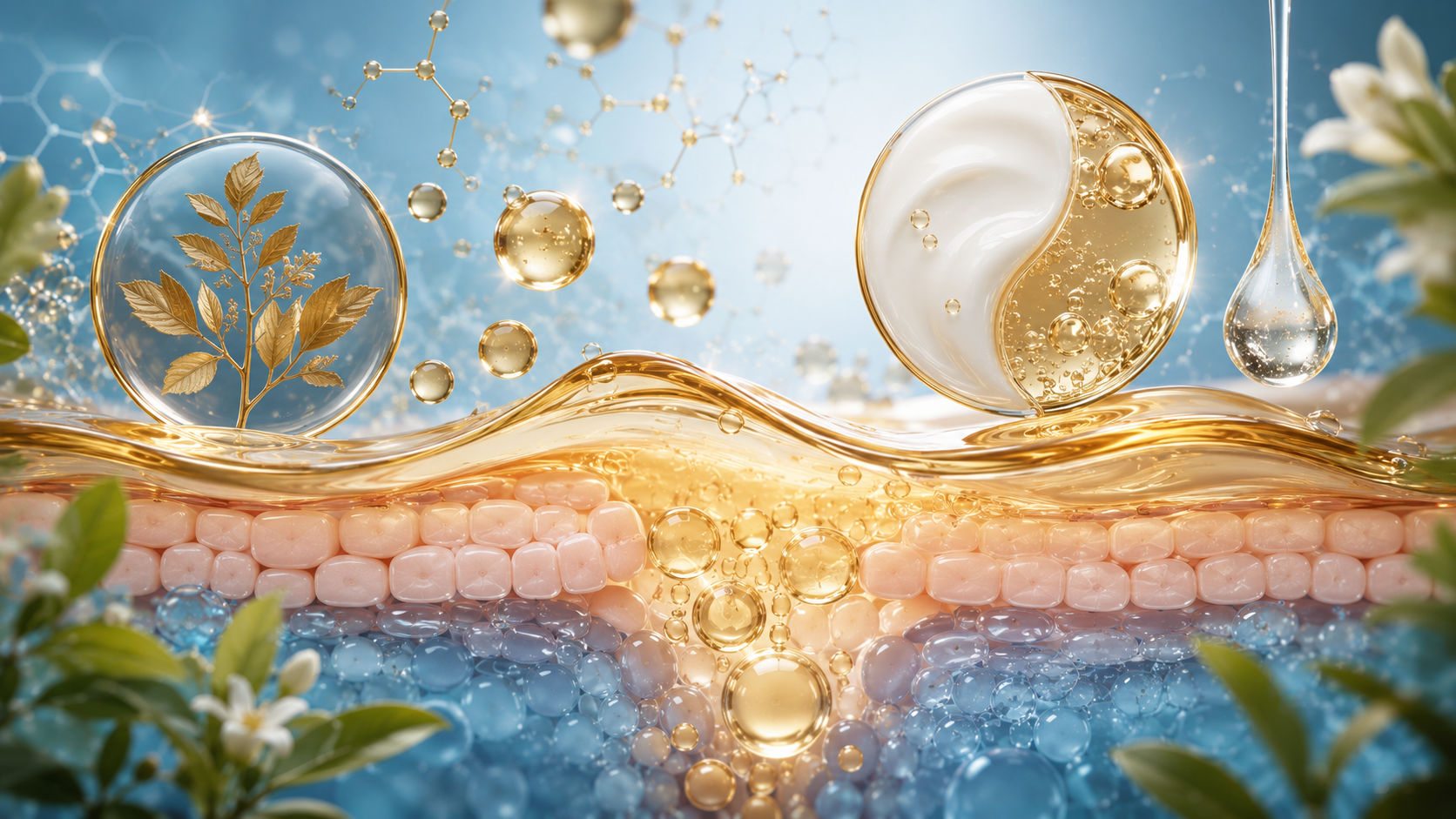
Satin looking skin. The secrets.
How to Get Satin-Looking Skin: The Water-Free Way to a Smooth, Radiant Finish
Satin-looking skin has a different kind of beauty.
It is not greasy.
It is not shiny in an artificial way.
It does not look overloaded, sticky, or heavy.
Satin-looking skin has that smooth, soft-focus finish that catches light gently. It looks cared for, comfortable, and quietly radiant. Not wet. Not oily. Not glittery. Just refined, smooth, and naturally polished.
For many people, that is the real goal of body skincare: not just applying something because the skin feels dry, but creating a finish that makes the skin look healthier, softer, and more elevated every day.
The problem is that a lot of body products are built around water, emulsifiers, fillers, and a quick cosmetic feel that disappears too fast. They may feel pleasant for a few minutes, but the skin can quickly return to looking dull, flat, or dry again.
That is where botanical lipids become important.
If you want satin-looking skin, you need to think beyond ordinary moisturising. You need to think about finish, feel, absorption, and the way your skin holds light after application.
What Does Satin-Looking Skin Actually Mean?
Satin-looking skin is skin that appears smooth, soft, even, and naturally luminous.
It is not about looking wet or oily. That is a common mistake. Many people apply too much heavy oil and think glow means shine. But high shine can look greasy, especially in daylight or under strong lighting.
A satin finish is more controlled.
It gives the skin a subtle radiance without making it look coated. The surface looks smoother. The tone appears more even. Dry-looking patches seem softened. The skin has presence, but it does not scream for attention.
That is why satin-looking skin feels luxurious. It looks expensive because it looks intentional.
The aim is simple: skin that looks touchable, calm, polished, and comfortable.
Why Skin Can Look Dull Instead of Satin
Skin often loses its satin appearance when the surface looks dry, uneven, or tired. This can happen for many cosmetic reasons: cold weather, hot showers, harsh cleansing, low humidity, friction from clothing, over-exfoliation, or simply not giving the skin enough lipid-rich care.
When the surface of the skin looks dry, light does not reflect smoothly. Instead of a soft glow, the skin can look flat, rough, or slightly grey.
This is why some people can moisturise every day and still feel like their skin does not look truly polished. The issue is not always the amount of product. It is often the type of product and the finish it leaves behind.
A water-heavy lotion may feel fresh at first, but once the water evaporates, the skin may not be left with enough richness to create that satin look. A very heavy butter may soften the skin, but it can also sit on top and feel too thick.
The sweet spot is a lightweight lipid layer that absorbs cleanly and leaves the skin with a smooth, refined finish.
The Role of Botanical Lipids
Botanical lipids are oil-based components from plants. In body skincare, they are useful because they help create softness, smoothness, and a more conditioned-looking surface.
This is not about drowning the skin in oil. It is about choosing the right oils with the right skin feel.
Some botanical oils feel rich and cushioning. Some feel dry and fast-absorbing. Some give slip. Some give a silkier finish. When blended properly, they can create a more elegant result than one heavy oil used alone.
This is where a product like [Essence Light] can become part of the routine. A morning body oil should not feel like a burden. It should give the skin a clean, satin-looking finish that works with your day, your clothes, and your confidence.
The goal is not to feel covered in product.
The goal is to look better in your own skin.
Why Water-Free Body Oil Makes Sense for a Satin Finish
A water-free body oil is different from a traditional lotion because it does not rely on water as the main base. Instead, it focuses on oils and lipid-rich ingredients.
That matters because when you apply a water-based product, much of that water eventually evaporates. The formula may still contain useful ingredients, but the experience is often built around quick freshness rather than long-lasting richness.
Water-free skincare takes another route.
It gives you a concentrated product where every drop has purpose. There is no unnecessary dilution. No water base. No need to build the product around the texture of a standard lotion.
For satin-looking skin, this is powerful because the product can focus directly on the finish: smoothness, softness, light reflection, and a more conditioned appearance.
A well-made water-free body oil should not feel greasy. It should feel elegant. The right formula should absorb into the skin and leave behind a controlled glow — the satin zone between dry and shiny.
How to Apply Body Oil for Satin-Looking Skin
Application matters.
Even the best body oil can feel wrong if too much is applied at once. Satin-looking skin comes from control, not overload.
Start with a small amount. Warm it between your palms. Press and smooth it across the skin rather than pouring it directly onto one area. Work in sections: arms, legs, shoulders, chest, stomach.
Use slow, even movements. Let the oil spread thinly. The skin should look polished, not wet.
If you want a softer finish, apply after a shower when the skin is clean and slightly warm. If you want a morning glow, use a lighter oil designed for daytime wear. This is where [Essence Light] fits naturally as a morning body oil — something you can apply before stepping into the day, not only after bathing.
The best finish should feel clean enough to move, dress, and live normally.
That is the difference between body oil as a product and body oil as a skin-finishing system.
The Morning Skin Advantage
Morning skincare is often underestimated.
Most people focus on the face in the morning and ignore the body. But your body is visible too — arms, neck, shoulders, legs, hands. These areas affect your overall appearance, especially in warmer weather, holidays, gym clothing, dresses, shirts, and open necklines.
A morning body oil creates an immediate visual upgrade.
The skin can look more awake. More even. More refined. More comfortable. That matters because confidence is visual. When your skin looks better, you carry yourself differently.
This is why a lightweight morning oil is different from a heavy night product. In the morning, you need elegance and control. You need something that gives the skin a better finish without slowing you down.
A product like [Essence Light] should be positioned exactly there: a morning body oil for satin-looking skin, clean absorption, and a polished start to the day.
Satin Skin Is Not About Perfection
One of the biggest mistakes in beauty is chasing perfect skin.
Real skin has texture. It has movement. It has tone variation. It changes with weather, stress, sleep, training, travel, and lifestyle.
Satin-looking skin is not about hiding everything. It is about improving the way the skin presents itself.
When the surface looks smoother and more nourished, the whole body looks more elevated. Legs look better. Arms look better. Shoulders catch light better. The skin looks more cared for without needing makeup, shimmer, or artificial shine.
That is the power of a good body oil. It does not need to transform your identity. It simply upgrades the visible finish of your skin.
Common Mistakes That Stop Skin Looking Satin
The first mistake is using too much product. More oil does not always mean more glow. Too much can leave the skin looking greasy instead of refined.
The second mistake is using products that are too heavy for daytime. Thick butters and dense balms can be useful in some routines, but they may not give the clean satin finish many people want during the day.
The third mistake is ignoring consistency. Satin-looking skin is built through repetition. One good application helps. A consistent routine changes the way your skin looks and feels over time.
The fourth mistake is using harsh cleansing without replacing softness. If your shower routine leaves your skin feeling tight, your body oil has to work harder. Gentle cleansing and lipid-rich care work better together.
The fifth mistake is waiting until the skin looks extremely dry before doing anything. Satin skin is easier to maintain than rescue. A small daily application is usually better than occasional heavy use.
What to Look for in a Satin-Finish Body Oil
A good satin-finish body oil should feel lightweight but not empty. It should spread easily, absorb cleanly, and leave the skin looking smooth rather than slick.
Look for botanical oils with a refined skin feel. Look for water-free formulas if you want concentration. Look for products designed around finish, not just fragrance or trend.
The best body oils do not only smell nice. They change the way the skin looks after application.
That is the difference.
A basic oil can sit on the skin. A better body oil feels designed. It gives slip, softness, glow control, and a polished final appearance.
For Rebel Palm, this is where the idea of water-free botanical lipid architecture becomes important. The aim is not to dilute the experience. The aim is to create a formula where every drop contributes to the look and feel of the skin.
The Final Step: Make It a Daily Standard
Satin-looking skin is not complicated.
Cleanse gently. Avoid stripping the skin. Apply a controlled amount of body oil. Let the formula absorb. Repeat consistently.
The result is not loud. It is better than that.
It is skin that looks smooth when you move. Skin that catches light softly. Skin that feels more comfortable in clothes. Skin that looks more polished without looking artificial.
That is the real beauty of satin-looking skin.
It does not need to be dramatic.
It needs to be disciplined.
A water-free body oil like [Essence Light] can become part of that standard: a morning step designed to give the skin a smooth, radiant-looking finish before the day begins.
Not greasy.
Not diluted.
Not ordinary.
Just soft, polished, satin-looking skin — built one application at a time.

Written by Andrew Karczewski
Visit author's website