Lipids & Skin Cells Explained. Why lipids are so important for hydrated younger looking skin?
Skin Is Not a Sponge. It Is a Wall.
Why Lipids Are the Mortar That Keeps Skin Smooth, Strong and Hydrated
Most skincare talks about hydration as if the skin is simply dry because it needs more water poured onto it.
That is only part of the truth.
Your skin is not a sponge.
It is closer to a protective wall.
And like any wall, its strength depends on the structure holding it together.
The outermost layer of the skin, called the stratum corneum, is often explained through the “bricks and mortar” model. The “bricks” are flattened skin cells called corneocytes, and the “mortar” is the lipid matrix between them — mainly ceramides, cholesterol, and fatty acids. This lipid structure plays a major role in the skin’s barrier function and water retention.
At Rebel Palm, this is the foundation of our philosophy:
Healthy-looking skin is not only about adding moisture.
It is about helping the skin hold onto what it already has.
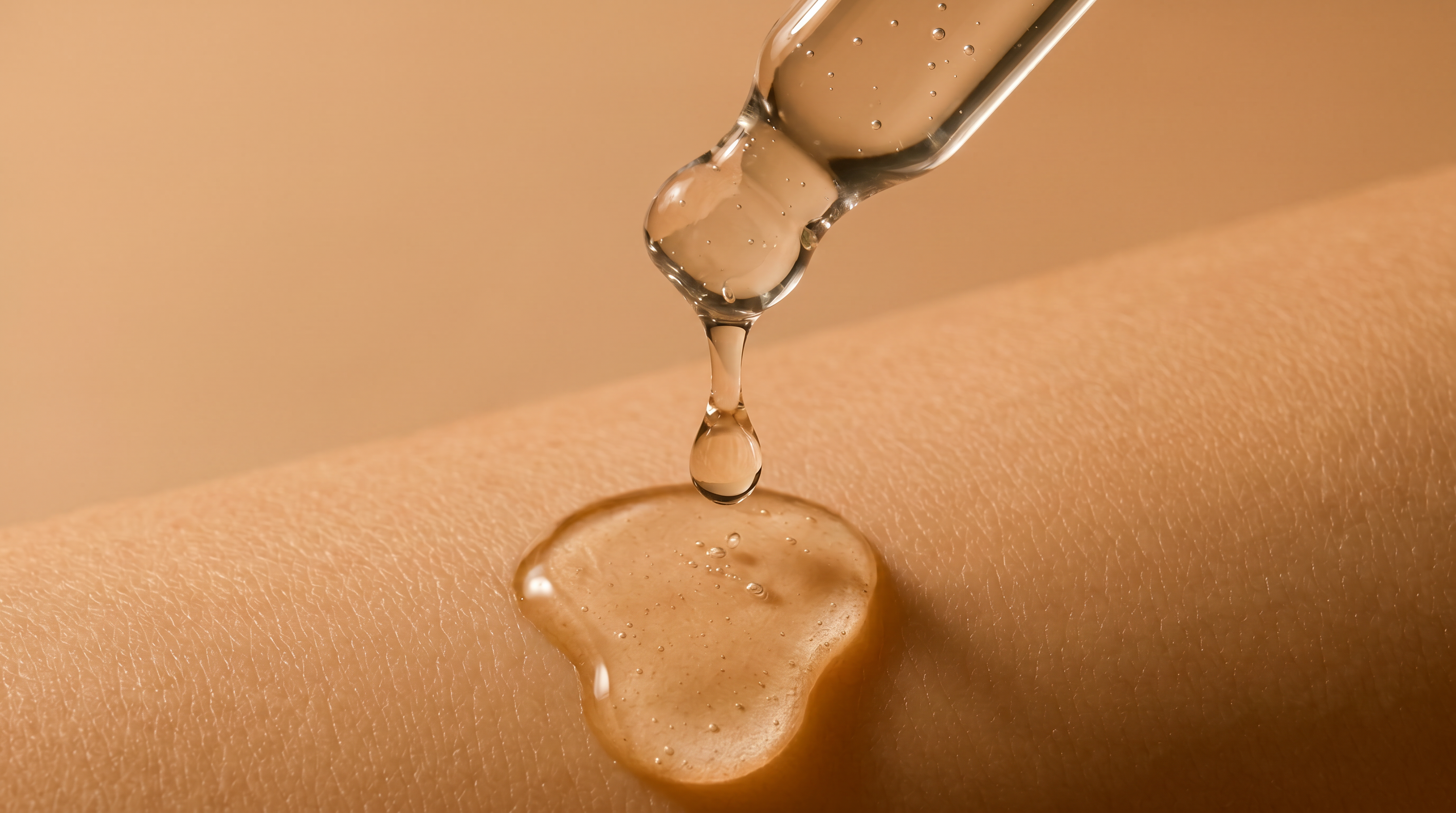
That is why we focus on Water-Free Lipid Architecture — concentrated botanical oils designed to support the skin’s surface, nourish the barrier, soften texture, and help reduce the dry, tight feeling caused by moisture loss.
The Bricks: Your Skin Cells
The visible surface of your skin is made of many layers of flattened cells. These are the bricks.
They form the physical structure of the outer skin.
When the skin is balanced, these cells sit neatly together, giving the surface a smoother, more even appearance. When the barrier is stressed, dry, over-cleansed, weather-exposed, or stripped, the surface can look rough, dull, flaky, tight, or uneven.
But the cells alone are not enough.
A wall made only of bricks, with no mortar, is weak.
The same principle applies to skin.
The Mortar: Your Skin Lipids
Between those skin cells is the lipid layer — the mortar.
This lipid matrix fills the spaces between the cells and helps create a flexible, protective barrier. Scientific descriptions of the stratum corneum highlight this organised lipid structure as central to the skin’s barrier function.
In simple terms:
Lipids help keep the skin barrier sealed, flexible, and comfortable.
They do not just make skin feel soft.
They are part of the structure that helps the skin function properly.
When the lipid mortar is strong, the skin is better able to:
- hold onto hydration
- feel smoother
- look more radiant
- resist dryness
- reduce the feeling of tightness
- maintain a more polished surface
- support a stronger-looking barrier
When the lipid mortar is weak or depleted, hydration escapes more easily.
That is when skin can feel dry even after applying a normal moisturiser.
Why Skin Loses Hydration
Your skin naturally contains water.
The problem is not always that the skin has no water.
The problem is often that the skin is losing water too quickly.
This process is called transepidermal water loss, often shortened to TEWL. It means water is escaping from deeper layers of the skin through the outer barrier into the surrounding air. Research on moisturisers and barrier function commonly uses TEWL as a marker for how well the skin barrier is retaining water.
When the barrier is compromised, more water escapes.
This can leave the skin looking:
- dry
- tired
- dull
- rough
- less elastic
- less luminous
- less refined
That is why true skin comfort is not only about “adding hydration.”
It is about reducing unnecessary moisture loss.
How Lipids Help Retain Hydration
Lipids help retain hydration by supporting the skin’s surface barrier.
Think of it like this:
If the bricks are skin cells, and the mortar is lipids, then hydration is what the wall is protecting.
When the mortar is thin, cracked, or uneven, the wall leaks.
When the mortar is supported, the wall holds better.
Lipids help create a more protective surface environment that slows the feeling of water loss and leaves the skin feeling more conditioned. This is why barrier-supportive ingredients such as ceramides, fatty acids, and cholesterol are so important in dermatology and moisturising science.
This is the key difference:
Water gives temporary moisture.
Lipids help the skin hold moisture longer.
That is the Rebel Palm logic.
We do not build products around dilution.
We build around the skin’s need for concentrated lipid support.
Why Dry Skin Can Still Happen After Moisturiser
Many conventional creams and lotions are built with a high water phase.
That does not automatically make them bad. Water-based formulas can be useful and can carry humectants, emulsifiers, and other ingredients.
But for people chasing a richer, more refined skin feel, water-heavy skincare can sometimes give a short-lived comfort effect.
It feels good at first.
Then the skin can still feel dry later.
Why?
Because surface hydration without lipid support can be temporary.
If the barrier is not well supported, the skin may continue to lose moisture.
That is why lipid-rich skincare matters.
It targets a deeper principle:
Do not just wet the surface.
Support the architecture that helps skin stay comfortable.
What Botanical Lipid Oils Do for Skin
Botanical oils are rich in different fatty acids, emollients, and natural oil-soluble compounds. They are not identical to the skin’s own ceramides, but they can help condition the surface, soften rough texture, improve slip, reduce the feeling of dryness, and support a smoother-looking skin finish.
This is where Rebel Palm sits.
We are not trying to make the skin feel temporarily wet.
We are creating a daily lipid ritual that helps the skin feel:
- smoother
- softer
- more supple
- more polished
- more luminous
- less tight
- more comfortable after cleansing or showering
The finish matters too.
A high-quality body oil should not feel heavy, greasy, or cheap.
It should melt into the skin with control.
It should leave the body looking expensive, not oily.
That is why our focus is a dry satin finish — skin that looks nourished, radiant, and smooth without a sticky residue.
Lipids and the Skin Barrier
The skin barrier is your first line of defence against the outside world.
It helps protect against dryness, environmental stress, and excessive water loss. The stratum corneum’s barrier function depends heavily on the organisation of its cells and intercellular lipids.
When this barrier is supported, skin often looks calmer, smoother, and more refined.
When it is disrupted, the skin may feel more reactive, dry, rough, or uncomfortable.
This is why aggressive routines can backfire.
Too much cleansing, over-exfoliating, harsh surfactants, cold weather, hot showers, and constant stripping can all make the skin feel less balanced.
The answer is not always more product.
Sometimes the answer is a better structure.
A simpler ritual.
A formula that respects the skin’s lipid architecture instead of constantly interfering with it.
Why Rebel Palm Is Water-Free
Rebel Palm was built around a simple rejection:
We do not believe luxury skincare should be mostly water.
Water has a place in skincare.
But our products are designed differently.
We choose a water-free architecture because every drop should have purpose.
No water base.
No filler logic.
No dilution disguised as luxury.
Instead, we use concentrated botanical lipid oils to create a richer, more intentional skin experience.
This gives the skin a different kind of finish:
Not wet.
Not sticky.
Not coated.
But smooth, conditioned, satin, and alive.
Hydration vs Moisture Retention
This is the part most skincare brands confuse.
Hydration and moisture retention are related, but they are not the same.
Hydration is about water content.
Moisture retention is about helping the skin keep that water from escaping too quickly.
A product can feel hydrating for a few minutes and still fail to support long-term comfort.
That is why Rebel Palm focuses on the lipid side of the equation.
Because skin that cannot retain moisture will always return to dryness.
The smarter move is to support the barrier.
That is where lipids matter.
The Rebel Palm Philosophy
We believe skin should be maintained like something valuable.
Not attacked.
Not stripped.
Not overloaded.
Not diluted.
Maintained.
The body does not need random complexity.
It needs the right architecture.
That means:
- lipid-rich nourishment
- water-free concentration
- elegant absorption
- barrier-conscious daily care
- high-performance botanical oils
- a polished satin finish
- skin that looks healthy, expensive, and alive
This is not skincare built around foam, fragrance, or first-touch illusion.
This is skincare built around the structure of the skin itself.
The Simple Truth
Your skin cells are the bricks.
Your lipids are the mortar.
Hydration is what the wall protects.
When the mortar is weak, moisture escapes.
When the lipid barrier is supported, skin looks smoother, feels softer, and retains comfort more effectively.
That is why lipids matter.
That is why Rebel Palm is water-free.
That is why we built our formulas around Water-Free Lipid Architecture.
Because real skin luxury is not dilution.
It is structure.
It is discipline.
It is every drop active.

Written by Andrew Karczewski
Visit author's website